
From Massive 3D Models to Fast Web Content: The Smithsonian’s Automated 3D Workflow
Table of Contents
The Smithsonian Institution’s 3D Program is dedicated to making cultural heritage objects more accessible through high-quality 3D digitization. From historic artifacts to natural history specimens, its online 3D viewer allows audiences around the world to explore remarkable objects in detail.
As the number and complexity of 3D assets continue to grow, the Smithsonian has found that one challenge becomes increasingly important: how to deliver rich, high-resolution 3D experiences online while still making the first interaction fast, recognizable, and reliable.
DGG supports the Smithsonian’s workflow with RapidPipeline across several 3D projects, including spotlight assets such as the Cash Register, Cher Ami, and George Washington’s Battle Sword and Scabbard. Beyond individual objects, RapidPipeline is also used as part of the Smithsonian’s automated processing pipeline, known internally as Cook, to generate lightweight preview derivatives for its 3D models.
The Challenge: Turning massive 3D assets into fast, high-quality Web content and previews
High-resolution 3D models can contain millions of triangles. While this level of detail is essential for preservation, research, and close inspection, it can create challenges for online viewing.
For the Smithsonian’s web-based 3D experience, a key part of the workflow is generating a “thumb quality” derivative for each 3D model. These lightweight versions are typically reduced to around 20,000 triangles, allowing users to quickly preview an object in the viewer while higher-resolution versions continue to stream in.
Historically, this reduction step was a pain point. Reducing dense meshes, sometimes from more than 10 million triangles down to approximately 20,000, could produce results that were unusable or difficult to recognize. For cultural heritage objects, where shape, silhouette, and recognizability are essential, this presented a significant challenge.
In addition, the Smithsonian is managing massive amounts of high-quality, digitized 3D content – meaning, not only a couple of 3D models need to be optimized, but typically hundreds of objects resulting in more than a thousand derivative assets per year. This is only feasible with an automation tool like RapidPipeline, working together with Smithsonian’s DPO Cook automation framework.
The Integration: RapidPipeline inside Cook
To improve this process, the Smithsonian integrated RapidPipeline into Cook, its automated processing pipeline.
RapidPipeline is used to generate lightweight “thumb” derivatives from complex 3D models, helping automate a step that previously required more manual review and carried a higher risk of failure.
Instead of relying on a reduction process that could compromise recognizability, RapidPipeline helps the Smithsonian produce lightweight versions that remain visually meaningful and suitable for fast web previews.
This is especially important for large-scale 3D collections, where each model needs to be processed consistently and reliably, without turning every asset into a manual optimization task.
The Results: Better Quality, Fewer Failures, and Faster Access to 3D Collections
At the scale of the Smithsonian’s production workflow, with over 3,000 assets generated from more than 500 capture data sets in 2025, the Smithsonian has found that RapidPipeline helps make the generation of lightweight “thumb quality” derivatives more reliable, consistent, and scalable.
Spotlight Objects: From Cher Ami to George Washington’s Battle Sword
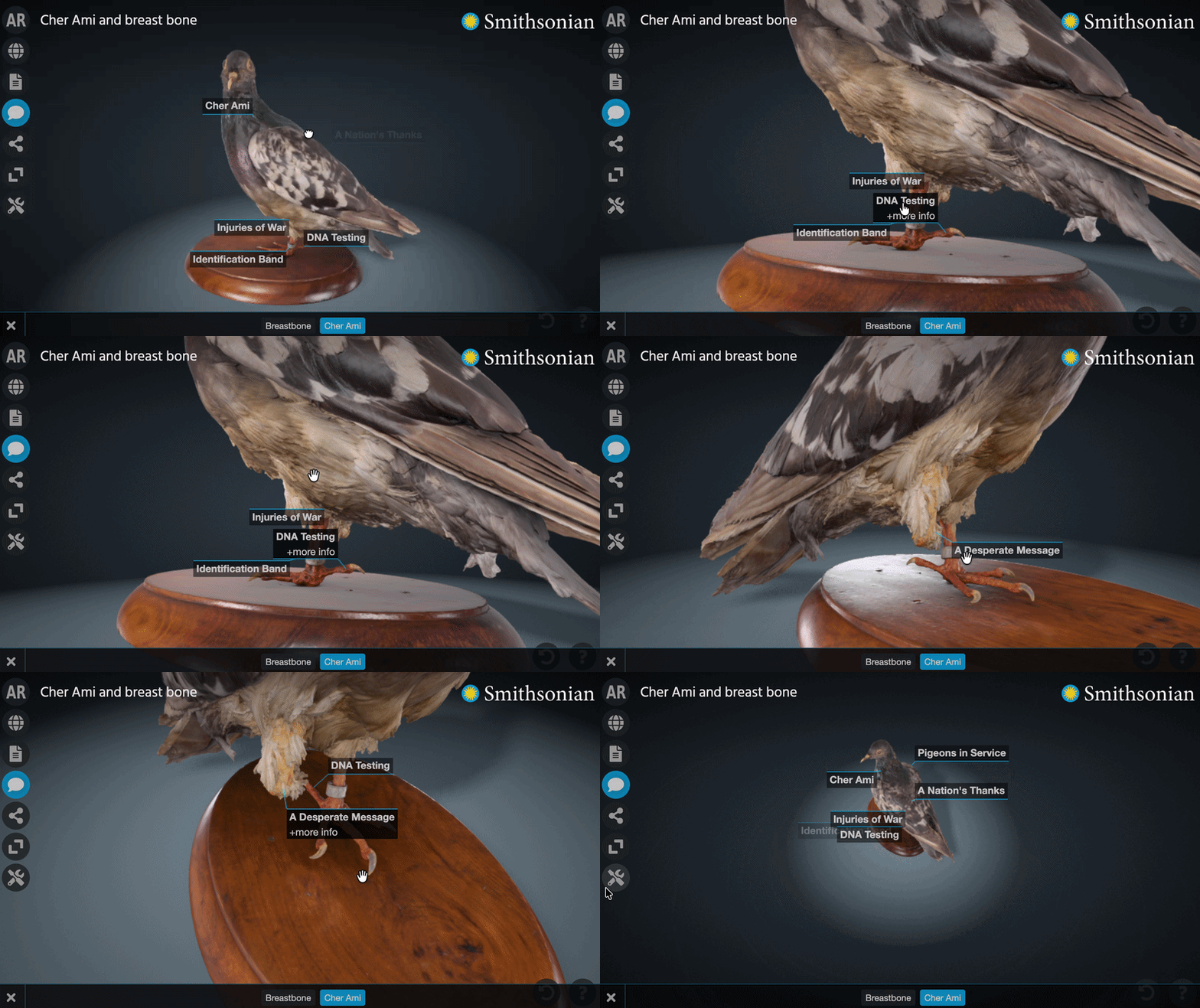
RapidPipeline has also supported several Smithsonian spotlight projects, including:
These objects show the diversity and cultural significance of the Smithsonian’s 3D collection. From historically important artifacts to emotionally resonant objects, each 3D model requires a workflow that balances fidelity, accessibility, and performance.
George Washington’s battle sword, in particular, offers a powerful example of how 3D technology can help bring iconic cultural heritage objects to a wider audience. By supporting the preparation and optimization of these assets, RapidPipeline contributes to making such objects easier to explore online.
Looking Ahead
As 3D digitization continues to expand, institutions like the Smithsonian face a growing need for automated, scalable, and reliable 3D processing workflows.
RapidPipeline helps address this challenge by enabling high-quality optimization and derivative generation for complex 3D models, supporting both technical efficiency and public accessibility.
For cultural heritage organizations, this means that more objects can be shared online in ways that are fast, engaging, and recognizable, helping audiences connect with history, science, and culture through interactive 3D experiences.