
The Complete DGN to glTF Conversion Guide
General Information
This guide is part of the RapidPipeline 3D Formats Knowledge Database.It shows how to convert DGN to glTF, if you'd like to know more about the formats, please check out the following links:
Converting and Optimizing DGN Files to glTF
There are various ways to convert between DGN and glTF. With RapidPipeline, you can easily convert and optimize DGN files, at scale. It supports glTF, as well as many other file formats (examples: PLY, OBJ, VRM, FBX, STL, USDZ, USD), at high quality.
The fastest way to convert a DGN file to glTF is RapidPipeline Twin Studio, the desktop app (free trial available): open your DGN file, pick glTF as output, export. If you need to process whole libraries, the RapidPipeline 3D Processor CLI runs the same engine as a batch tool that you can integrate into your own pipeline.
Convert DGN to glTF with RapidPipeline Twin Studio - Free Trial
Download RapidPipeline Twin Studio, open your DGN file and export it as glTF - optimized and ready to use in a few clicks. No credit card required.
⬇ Download Twin Studio & convert DGN to glTFWhat are DGN and glTF files commonly used for?
The DGN file is a format mostly used for CAD and infrastructure design data.
The glTF file is a format mostly used for interactive 3D, on the Web and elsewhere (e.g., in XR).
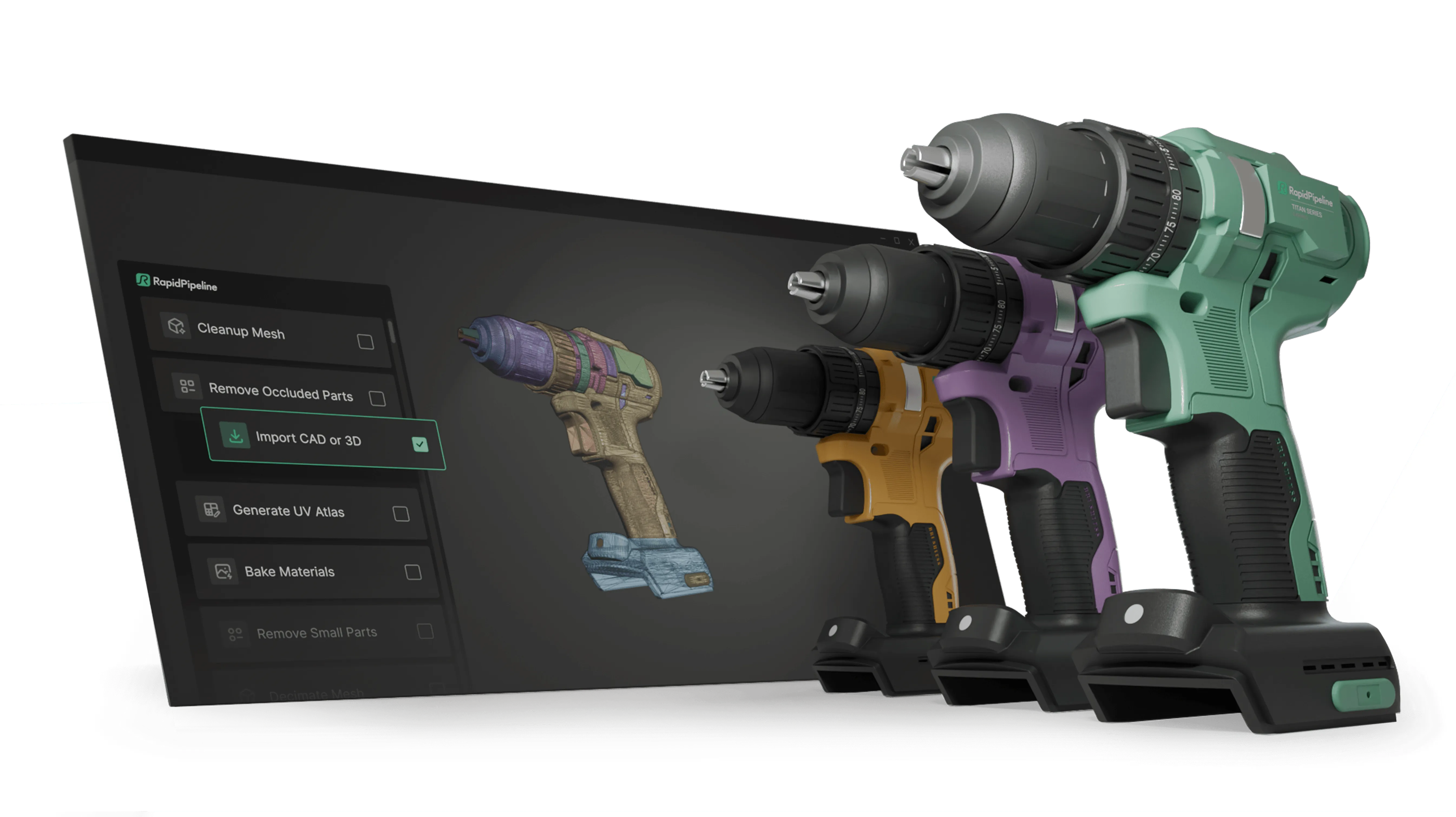
Create 3D digital twins for CGI & XR, faster than ever.
Turn your raw 3D or CAD into realistic digital twins.

Comparison of Features Supported by DGN and glTF
| Feature | Supported by DGN | Supported by glTF |
|---|---|---|
| PBR Materials | Partial0 | Yes |
| Transparent Materials | Yes | Yes |
| Vertex Colors | Yes | Yes |
| Materials | Yes | Yes |
| Embedded Textures | Partial1 | Yes |
| Normal Mapping | Partial2 | Yes |
| Procedural Textures | No | No |
| Texture Compression | No | Yes |
| Texture Transforms | Yes | Yes |
| Multiple UV Channels | Partial3 | Yes |
| Texturing | Yes | Yes |
| Hierarchical Scene Graph | Yes | Yes |
| Scene Composition | Yes | No |
| Scene Nodes | Yes | Yes |
| Quad Meshes | Yes | No |
| Free-Form Surfaces | Yes | No |
| Geometry Compression | No | Yes |
| Basic 3D Geometry | Yes | Yes |
| Standardized Format | Partial4 | Yes |
| Morph Targets | No | Yes |
| Skinned Animations | No | Yes |
| Rigid Animations | Partial5 | Yes |
| Animations | Partial6 | Yes |
Create 3D digital twins for CGI & XR, faster than ever.
Turn your raw 3D or CAD into realistic digital twins.
Limitations of DGN Files to glTF Conversion Workflow
The following limitations should be taken into account when converting DGN files to glTF format:
| DGN Feature (not supported by glTF) | Limitation Details |
|---|---|
| Free-Form Surfaces | Free-Form Surfaces Support: DGN: Full support | glTF: No support 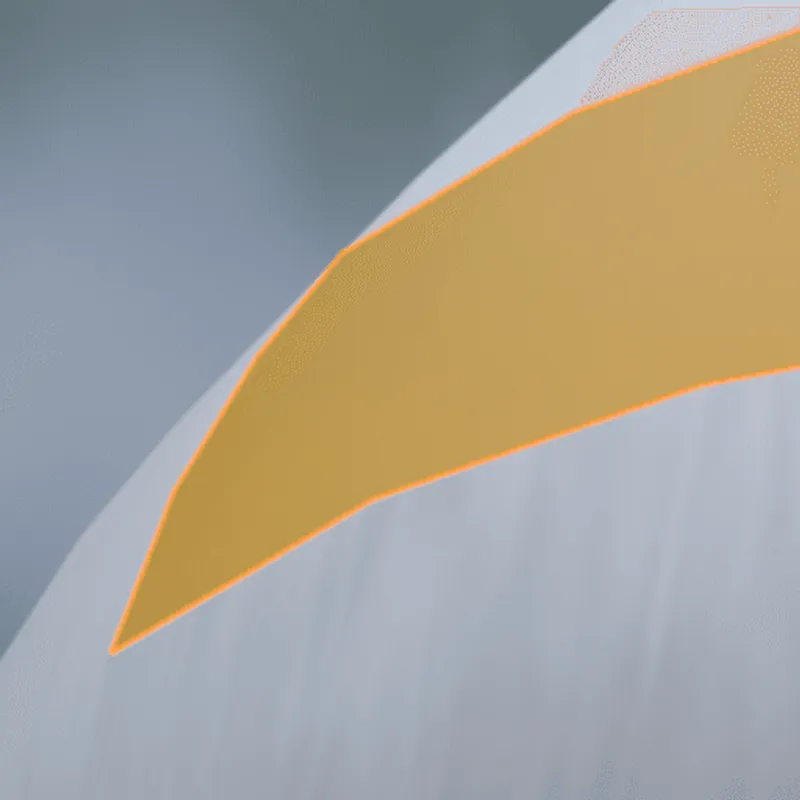 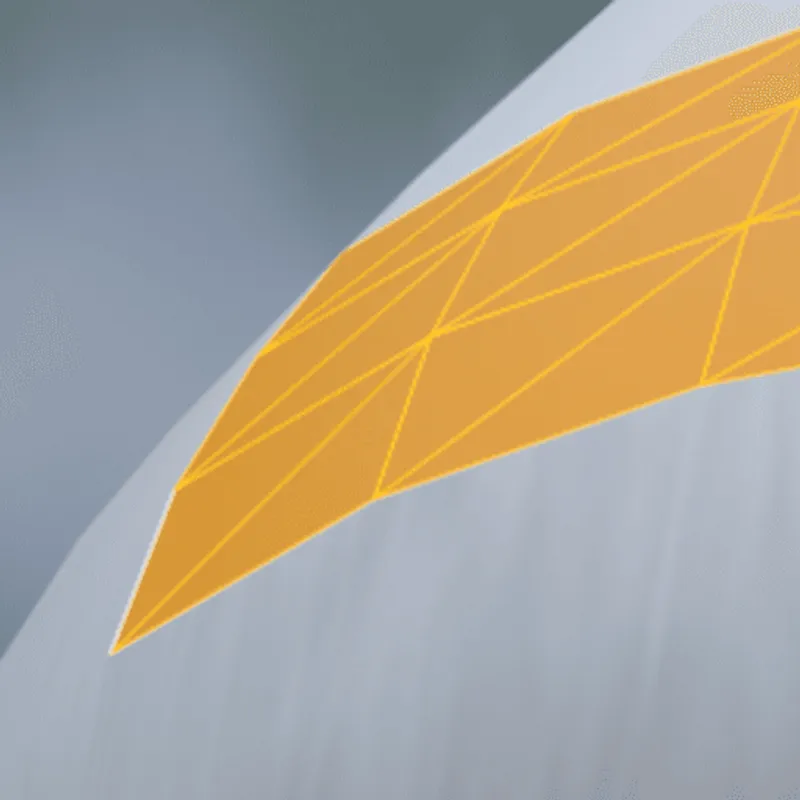 Impact: Free-form surfaces allow a CAD user to design surfaces with advanced controls over curvature and continuitiy. While these surfaces are common for CAD models (in the form of so-called boundary representations or "B-reps"), they need to be converted to polygonal triangle or quad data to work with most 3D rendering engines - a process called tessellation. In this example, a surface patch is used to describe a part of a curved surface of a product. Without support for this feature, the free-form surface has to be tessellated into quads or triangles. |
| Quad Meshes | Quad Meshes Support: DGN: Full support | glTF: No support 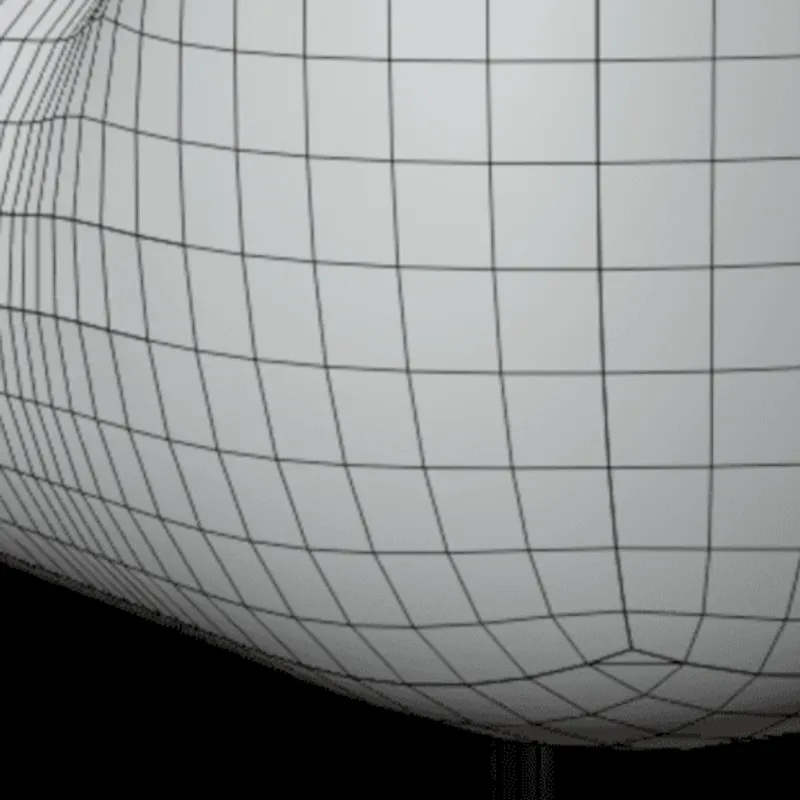 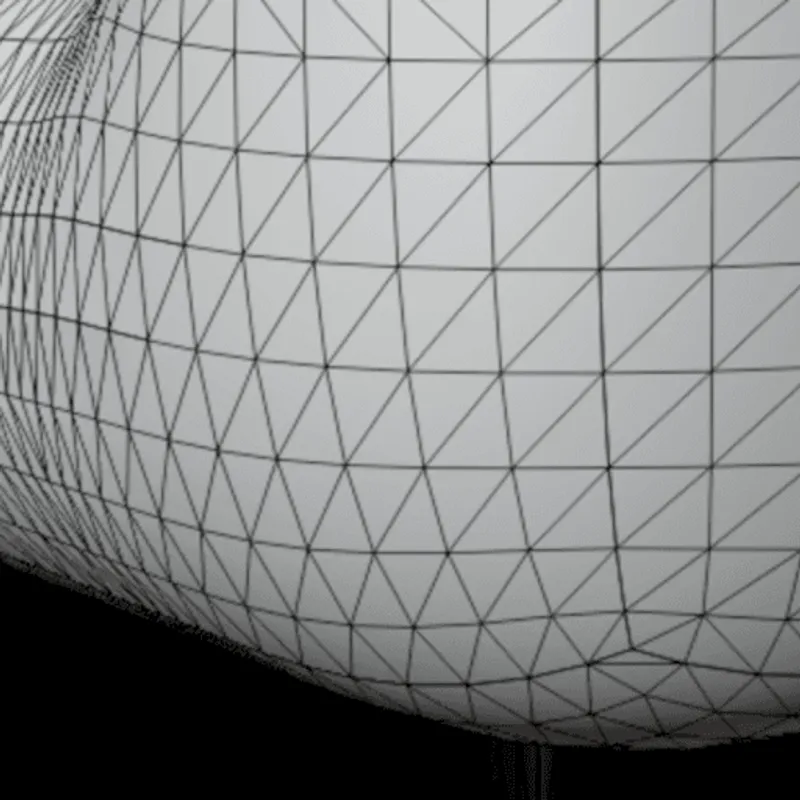 Impact: Quad meshes are a common way to hand-model and edit 3D models. 3D artists get intuitive control and such meshes are also easy to refine, as well as well-suited for creation of skinned animations. However, real-time rendering pipelines and hardware are usually all based on triangles, so if a 3D model should not be edited any more, it is safe to convert quads to triangles (and engines will do this automatically before sending data to the rendering hardware). In this example, a part of a mesh is modeled with quads. Without support for this feature, quads will have to be triangulated, producing a pure triangle mesh. |
| Scene Composition | Scene Composition Support: DGN: Full support | glTF: No support   Impact: Scene Composition describes the process of composing a scene through links from a main scene that pull in various other scenes/3D models. This can also happen in a nested fashion (through multiple levels of linkage). With a target format not supporting this feature, references to external models must be resolved and the content be baked into one 3D model, which is then saved in that target format. |
What's the best way to get DGN files into my 3D applications, and are there alternatives to using glTF?
Doing 3D conversion right, especially at scale, can be tricky, as 3D data is in general a rather complex (yet very powerful!) medium. This also applies to DGN and glTF files - the conversion guide above provides a rough first idea about that. Once you know what you would like to do, tools like RapidPipeline can help you perform the necessary steps, and to even automate the process for thousands or even millions of files.
Especially when introducing pipelines and workflows at scale in an enterprise context, it is usually good to rely on dedicated tools and expertise, making sure you do not introduce any steps into your 3D workflow that are detrimental to the final output's quality, or that take your team too much time (and money).
If you're interested to hire dedicated expertise from the best in the field to help your company reach your goals fast and reliably, please do not hestitate to contact DGG. Being the creators of RapidPipeline, and ambassadors for open 3D standards for more than a decade, we have been building some of the world's most advanced 3D pipelines, having processed many millions of 3D assets.
Therefore, our expertise will help you to reach your goals faster, at scale, and with the least possible friction, since we are focused on maximum interoperability.
To get started with 3D data conversion and optimization today, sign up for a free account!
If you have any questions, feel free to chat with our human team.
Create 3D digital twins for CGI & XR, faster than ever.
Turn your raw 3D or CAD into realistic digital twins.
Meet the Author

3D Knowledge Team
3D Technical Artists
RapidPipeline lets you convert, optimize and prepare your 3D models, easily. Try it today, or meet our human 3D experts. The Best-in-Class Tools for Your 3D Processing Jobs