Table of Contents
Introduction
While CAD models are a great source for digital twins and product visualization, tessellation can often result in meshes with a very high face count, making them too demanding for many real-time applications.
In this Model of the Month, we will show how RapidPipeline's Decimate Action and deviation settings can be used together to significantly reduce the face count while preserving the model’s overall appearance.
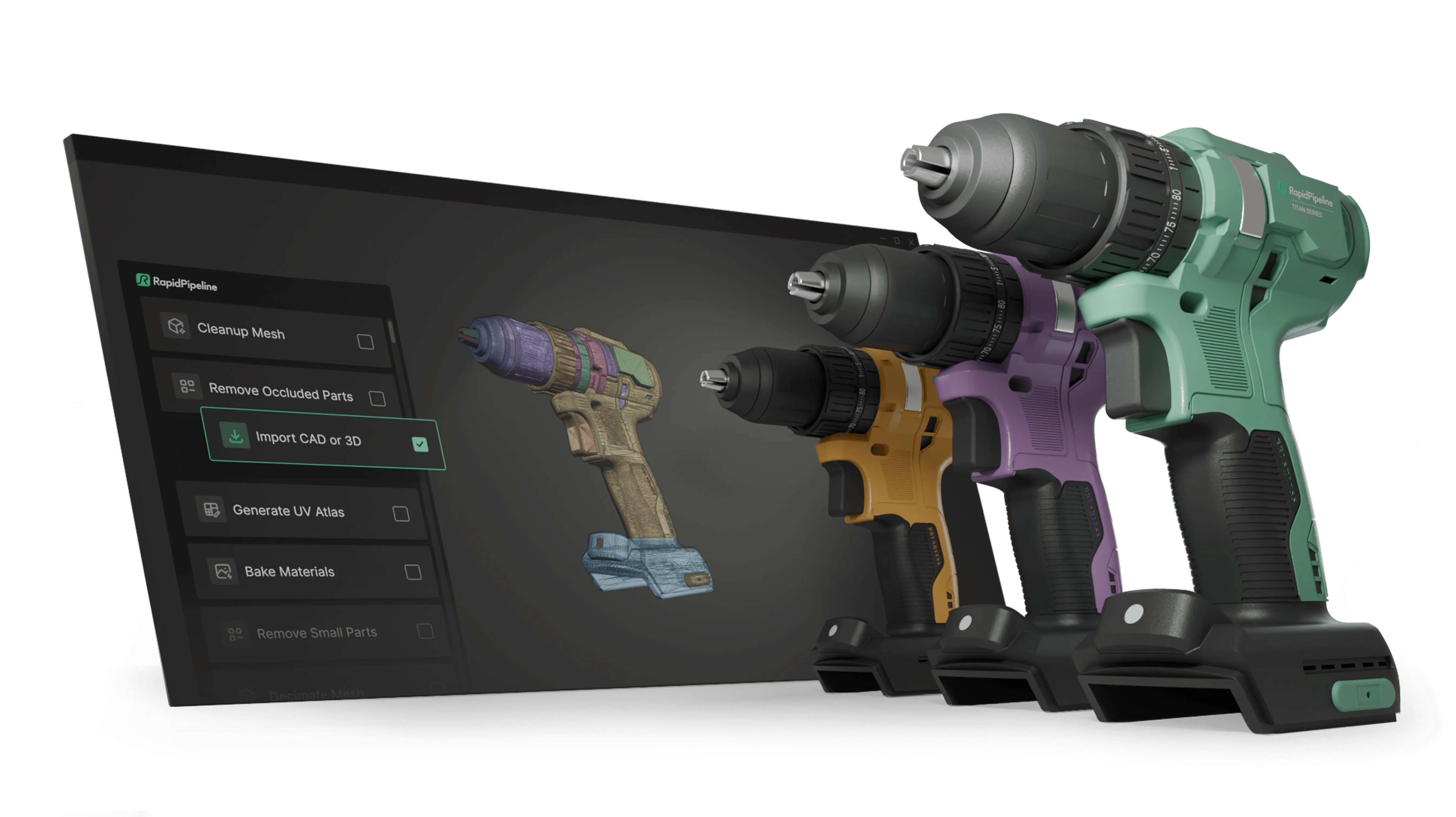
Create 3D digital twins for CGI & XR, faster than ever.
Turn your raw 3D or CAD into realistic digital twins.
Importing the model

For this example, we used a .3dm Camera model. Using the RapidPipeline plugin, we can tessellate and import it into Blender. The resulting tessellated mesh has about 625K polygons.
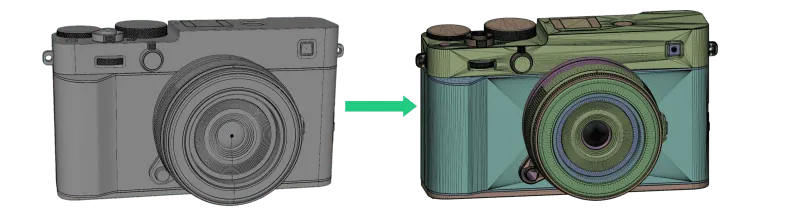
CAD source File Tessellated Output
To make the model more suitable for real time applications, the model’s face count needs be reduced, while preserving the details that matter visually.
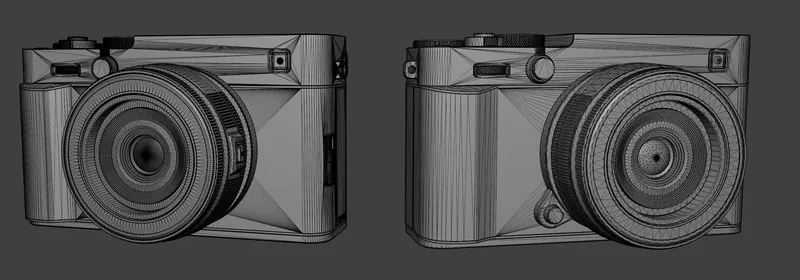
To achieve this, we used RapidPipeline's Decimate Mesh action with a defined deviation target. The deviation setting controls just how much the optimized geometry is allowed to differ from the original model during optimization. This enables a substantial face count reduction without affecting the model’s visual appearance. In this example, a deviation target of 0.01 was used.
Different parts of the model were optimized using individual face targets while maintaining the same deviation target throughout the process. This resulted in a face reduction from approximately 625,000 polygons to just 160,000 polygons, while preserving the overall visual fidelity.
Adding Materials
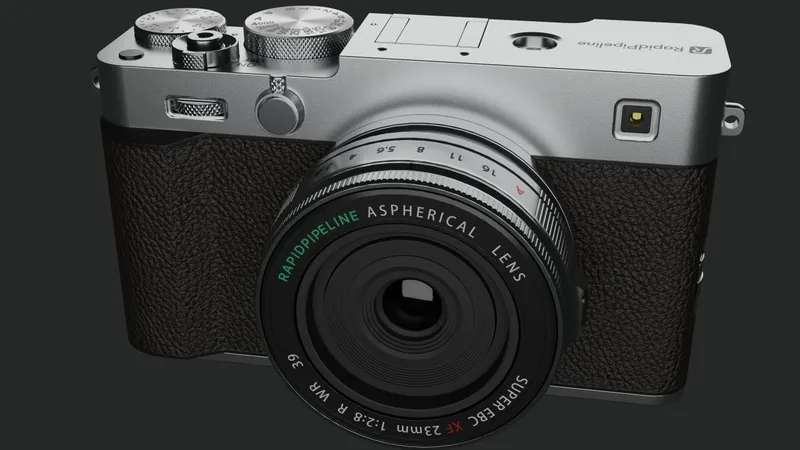
With the geometry optimized, the model can now be further prepared for real-time applications. Using Blender's material system, materials were generated, applied and baked to achieve the model’s final appearance.
Export
Once all the materials are ready, the model can now be exported. RapidPipeline’s export settings provide additional options to further optimize the model such as customizable material formats and geometry compression.
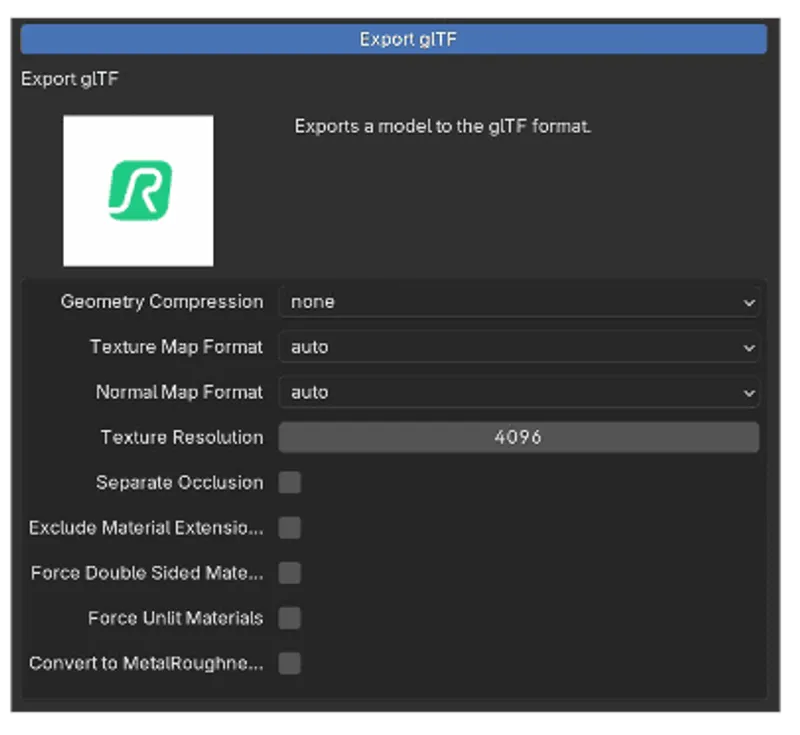
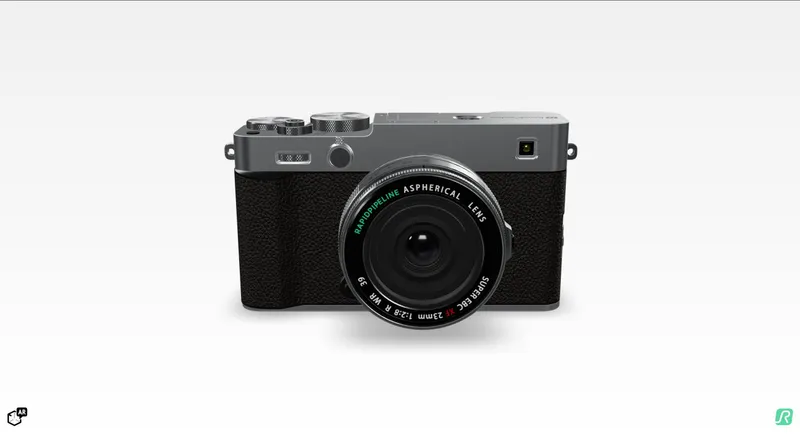
The result is now a 15MB asset with 160K faces, created form a 60MB high detail CAD file.
You can explore the final version of the model using our interactive viewer below.
The model can also be viewed in AR for an even closer look.
Meet the Author

Daniel
Technical 3D Artist
Daniel is a 3D and VR artist and responsible for QA at DGG. Working with leading retailers, DGG is on a mission to automate 3D asset optimization workflows for Web, mobile and XR targets - for e-commerce, and beyond. Daniel completed his studies in Expanded Realities at the Hochschule Darmstadt.
You might be interested in